Dan Friedman

PROFESSIONAL COACHING 4 VOICE & SOUND

828.551.0891
Dan@Sound4VO.com
  • Home
  • Coaching4VO
  • About
  • Demos
  • Books
  • Services
  • Testimonials
  • Blog
  • Merch
  • Contact

Archives for 2012

FaffCon 5 Voiceover Unconference… No Finish Line.

October 18, 2012 by Dan Friedman

FaffCon 5 reached the finish line, as all FaffCon’s have, in spectacular fashion. I can honestly say, I think this was the best FaffCon to date. This is a VERY BOLD statement, because every FaffCon has been absolutely amazing.

In the past, following each FaffCon, I have written blogs about my experience and thanked many people for specific things that they did or what effect they had on me while we were there. I will do that here, but to a much lesser degree than in past blogs. It is simply getting too difficult to remember everyone for everything they do to make FaffCon what it is, or to express how deeply I care about everyone who touches my life before, during and after each event.

FaffCon5 was special for many reasons.

The Omni Hotel was very nice and convenient to everything. I loved getting coffee with soy milk delivered to my door every morning.

The mix of great VO people and their talent was undeniable. Their energy was electric. The fact that many attendees had experienced at least one past FaffCon, allowed everyone to get in the groove and begin faffing without hesitation. Those new to FaffCon caught the vibe as to what this event is all about and joined in quickly. For everyone, it was safe, familiar, comfortable and fun.

The fact that so many people arrived a day early to spend as much time with friends as possible, is indicative of how welcoming the crowd is at FaffCon and how close many of us have become. I went to bed after 2AM each night (3AM on one night) just so that I could spend as much time as possible with old friends and get to know new ones. Sure, I was tired every morning at 7AM, but I would not have wanted to do it any other way.

Organizationally, as a member of the “Pit Crew”, I believe we are getting pretty good at this. As a simple example of how good… words really can not express what a pleasure it was to be able to sit in the lounge area with Amy Snively and watch her actually mingle with everyone. I don’t recall ever seeing that during a past FaffCon… she never had the time. Much of this is due to the tireless efforts of Lauren McCullough, who kept all of us in line and on task. She did so with a sweet smile, a calm nature and heaps of positive feedback. Lauren ROCKS!

As I mentioned earlier in this post, in the past I’ve written an extensive list of “thank you’s”. My good friends, and you know who you are, already know how much each of you mean to me, how much you inspire me and that I am here for each and every one of you. I love you all. With that being said, I still have a few specific shout outs that I must make.

Joey Schaljo – It was a pleasure meeting you. I really enjoy working with you through Edge Studios. I’m grateful for the opportunity to assist Edge students and teach Home Studio Classes. While I always enjoy seeing David Goldberg… you are MUCH prettier. Sorry David! 😉

Dave White and Leslie Wadsworth – Thank you both for extending FaffCon 5 by another day. I was thrilled to be able to give you a tour of ProComm Studios and share a meal of the best shrimp and grits anyone will ever find (thanks also to Tupelo Honey Cafe).

Monk Schane-Lydon – Thank you for inviting me into your “Home Studio on a Budget” session. Besides learning a few things and getting to know you a little better, it is refreshing to know that there are people in this business who will go to great lengths and stop at nothing to make their home studios, sound like pro studios.

Jeffrey Umberger – Thank you so much for your humor, your time and your kind words. It was great to hear that when I send you an audition, it makes you “proud”. That makes me feel proud and so very grateful for all of your hard work on our behalf.

Tanya Buchanan – What a pleasure it was to shut down the bar with you for two nights. While we may have closed down that bar, it is clear that you share my passion for “raising the bar” for our industry. Please do not hesitate to let me know how I can help you with that effort.

Cliff Zellman – What can I say? Thank you for being such a great friend. I’m fired up about our ideas and I know we can bring a new level of awesome to the voiceover world. Thank you for dinner-to-go on Sunday night. When I got home… I ate it up. YUM!

Amy Snively – I’m not thanking you for making FaffCon happen. I’ve done that many times. I’m not thanking you for your friendship. I do that often as well. I am thanking you for the two word phrase you told me as we were sitting down preparing for everything to get started. I’ve got several two word phrases in response, “I can”, “I will”, “I am” and… “love you”.

Dan Hurst – I should hand over all of my golden nuggets to you immediately.
Brother, you have no idea how much you have helped me and how much your words have inspired me. Both my present and my future are brighter thanks to you. Thank you! Thank you! Thank you!

At the closing circle of every FaffCon, we fill out postcards with personal messages that get delivered to us prior to the next FaffCon. I’ve always written down a personal goal that is big, yet completely achievable with hard work, perseverance and a little bit of luck… or maybe its magic. I’m very proud to say that I have met each goal. There is no finish line when it comes to FaffCon. When the event is over, the faffing continues.

FaffCon… makes magic happen.

Filed Under: Sound4VO News

Directing Voiceovers… Lend Me Your Words

October 3, 2012 by Dan Friedman

Click Here to Listen!

Effectively communicating with a voiceover talent during a recording session can be a struggle for clients, or for many new directors. Recently, a client suggested posting “a list of words that can be used to help explain the changes they would like the voice over person to modify.” This sounds like a great idea and an easy thing to do… right? Well, yes… and no. While a list may be helpful in some situations, it would only scratch the surface of what may be involved when directing a voice talent.

Contradiction

Much of the language used when directing seems contradictory. For example, “urgency” almost never means to read the script fast and “intensity” does not mean to shout or automatically give a script the monster truck rally treatment….

“SUNDAY! SUNDAY! SUNDAY! YOU’LL PAY FOR THE WHOLE SEAT… BUT YOU’LL ONLY USE THE EDGE!” 😎

While that delivery is intense… it would be inappropriate on an intense commercial for a hospital. Similarly, while “urgent care” in a hospital means to get care quickly, in a commercial for a hospital, “urgent” usually means to read somewhat slowly, with great concern and importance.

Another term that is used frequently is “cool”. Does this mean cool, as in hip or cool as in calm? Contradictory and/or ambiguous language is just one reason why a list of words or certain terminology will not help in every circumstance.

What’s My Motivation?

Because every talent responds differently to different methods of direction, what works for one talent… may not work for another. While some talent may respond well to simple words or verbal cues, others may need background information such as what the writer’s intention is or in what format will the final production be presented (radio/tv commercial, boardroom presentation, classroom presentation, etc.). Many voice talent like to know the environment in which a scene takes place… for example a coffee shop, city street corner, or bedroom. The same dialog can take place in any of these locations but each may require a different delivery. A voiceover talent may want to hear the music if it has been chosen, or be given specific guidance on inflections or even where to stop and take a breath. The possibilities and combinations of factors are seemingly endless.

Directing, like most things, is much easier after gaining experience. But, the best way to do any job… is by not having to work hard at it. Thankfully, there are a few ways to help you get the delivery you desire with minimal effort and without the need to do much directing. Like many other professions, using the right tools and having the right team can make the difference.

The Tools and the Team

The first best method for getting the delivery you want, is to have a well-written script. Good scripts provide road maps for the voice talent. Proper punctuation, grammar and formatting are helpful, but more importantly, the use of descriptive or illustrative words allow the talent to capture the mood and feel of the message. Unless you are seeking a delivery that is intentionally counterintuitive or completely unique (a character voice for example), the tone of the script should be obvious to the voice talent.

This brings us to the second best method, which is to choose the right talent for the job. Here is where things can get very tricky. A voice may sound great on a demo, but that doesn’t necessarily mean that the voice talent is the right choice for your script. Time and time again… big announcer voices are hired for their vocal quality, but are asked to sound conversational. This usually requires additional time and effort for the delivery to sound believable (as though a “real person” is presenting the information).

Some voice talent are more suited to announcer reads, others are great at sounding conversational and others are good at narrating or story-telling. Some talent can interpret copy flawlessly, while others need extensive direction, instruction and line reads in order to achieve the delivery you are seeking. Some talent can interpret copy very well while acting as a character, but have great difficulty when delivering the same material as themselves. The trouble is, as the client acting as director, you often don’t know what your chosen talent’s strengths and weaknesses are… until after you’ve hired him or her.

With a well-written script, it should rarely take a voiceover talent more than four attempts to get the tone of the delivery correct. The first take should be left to the talent’s interpretation of the script. A good voice talent will usually get reasonably close on the first pass. The second take is used for dialing up or dialing down the energy or for any clarifications on tone or characterization. The third take is for fine-tuning any changes made in take two. By take four, the over all tone will ideally be dialed-in.

No Substitute For Experience… or Great Ears.

Great voiceover talent don’t need much direction and a good script will provide most of the information a voice talent should need. But once the tone and delivery are where they need to be, tweaks and fine-tuning may still be necessary to help the talent provide the best performance possible. This is when experienced audio producers and engineers become an increasingly more valuable part of your team.

Professional audio engineers, who specialize in voiceover, often take on the role of director. They often work with many voice actors and have experience knowing not only what buttons to push on the equipment, but also which buttons to push within the talent that will produce the desired delivery. They may also be responsible for the assembling the final mix and will develop a “vision” for what will help the final production sound best. When you find an engineer who shares your vision, do not hesitate to allow him or her to interpret your needs and communicate them to the talent if you are having difficulty.

Lend Me Your Words

Clearly, there is a great deal involved in directing a voiceover session. While a list of words may not always be helpful or simple to create, there is no reason why we shouldn’t try. I’ve included a few words with their possible meanings in this article. I invite all of you (talent, directors, engineers, coaches… and everyone reading this blog) to add some of your own in the comments section and I’ll compile them for a future post. I look forward to seeing and hearing what you come up with.

Filed Under: Voiceover Tips & Advice Tagged With: 4VO, Dan Friedman, sound4vo, VO directing, voiceover, voiceover book

Gearing Up for FaffCon5

September 30, 2012 by Dan Friedman

Ladies and gentlemen, START YOUR ENGINES!! FaffCon5 is less than two weeks away. For me, as it has been the previous three FaffCons (I’ve only missed the very first one), it couldn’t have come at a better time. Since Charlotte, NC is only about an hour and a half from Asheville, it also couldn’t be in a better place.

Over the last couple of years, my career has taken many twists and turns. Like everyone in this industry, I also travel the highways and confront the crossroads that are associated with a voiceover career. Marketing, branding, improving my skills, balancing work and family, setting goals, getting word out about my book, and managing my very unique needs, is at times… exhausting. Thanks to FaffCons 2, 3 and 4 and the people who’ve made them happen (that is you, the participants, by the way) I’ve discovered new paths, navigated around obstacles, achieved new goals and have been driven to keep moving forward. All of this, plus continuing to make amazing new friendships, is why FaffCon is a vital part of my career, as well as my life.

While FaffCon has become important to my career, what has been even more rewarding, is the satisfaction I’ve received from helping others along their path. From providing new opportunities, to offering technical assistance, it is deeply gratifying to know that I have been a part of the pit crew that has helped other voice talent be in the driver seat and keep their careers on track.

You simply can not get this level of peer-to-peer career assistance or motivation at any other event. Furthermore, you will not find a group of people who are more passionate about their careers, or the voiceover industry in general, than you will at FaffCon. Whether some part of your career needs refueling, or you are looking for new ways to keep racing forward, a weekend at FaffCon is a must stop for every working professional in the world of voiceover.

Look for me while you are at FaffCon5. Let me know how I can help you. I believe that sharing in the success of others, is a great way to make it into the winner’s circle.

Filed Under: Sound4VO News

What A Voiceover Demo Is… and What it is Not

August 22, 2012 by Dan Friedman

A voiceover demo is your business card. A demonstration of your abilities and talent. It is a reflection of your ability to present yourself as a professional. It is representative of whether you can communicate and deliver copy, but also indicates whether you can hear what it takes to deliver that copy effectively. After all, when it comes to voiceover, communication requires talking as well as listening.

On at least a weekly basis, I hear or receive voiceover demos that simply aren’t demos at all. Please take the following items into consideration before sending out your “voiceover demo”.

What is NOT considered a voiceover demo:

1) A seemingly endless stream of outdated character voices that you think you can do
2) An air-check from your radio days (even if one of those days includes yesterday).
3) A single commercial spot.
4) Messages that you put on your answering machine.
5) A recording of yourself reading from a book.
6) Any voice recording that was performed in a noisy or unprofessional sounding environment, even if your delivery of the script was nicely performed.
7) Slapping a recording of your voice over a piece of music (especially well-known songs).
8) Anything that begins with, “Hi, my name is (doesn’t really matter because the listener has already moved on) and this is my voice demo”. P.S. – I only know that something follows the name because I sometimes listen further knowing I might get the opportunity for a laugh (although… usually not in a good way).
9) An audio file that is ambiguously labeled and offers no way of knowing who you are.
10) Any and all combinations of one through nine.

Ideally, you want your demo to be memorable. While some of the things listed above can definitely make a voice demo memorable… is that how you want to be remembered?

Here are some additional articles about voiceover demos:
Are You Ready To Make a Voiceover Demo?
A True Story and Advice on Voiceover Demos

Filed Under: Voiceover Demos, Voiceover Tips & Advice Tagged With: 4VO, Dan Friedman, sound4vo, voiceover book, voiceover demo

Voxy Ladies Asheville Mixer

August 20, 2012 by Dan Friedman

Although we have great restaurants and sky-high views, Asheville isn’t often considered a “hot spot” when compared to cities such as New York and Los Angeles. Fortunately, Asheville was just as hot as those cities this past weekend as it was home to the southeast Voxy Ladies Mixer.

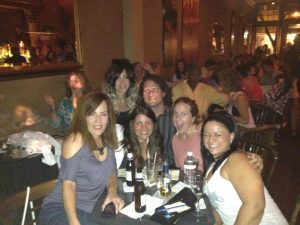
I was one lucky guy to hang out with the Voxy Ladies at the Carolina Rex show.

I had a great time hanging out with these beautiful ladies as well as with the many friends, both new and old, who came to the Bywater for some food, fun and the opportunity to help children in need.  Boxes of books and school supplies were collected for BookPals and Eblen-Kimmel Charities.

Both in and out of the voiceover booth, these ladies do great work!

The VOXY LADIES!

Filed Under: Sound4VO News

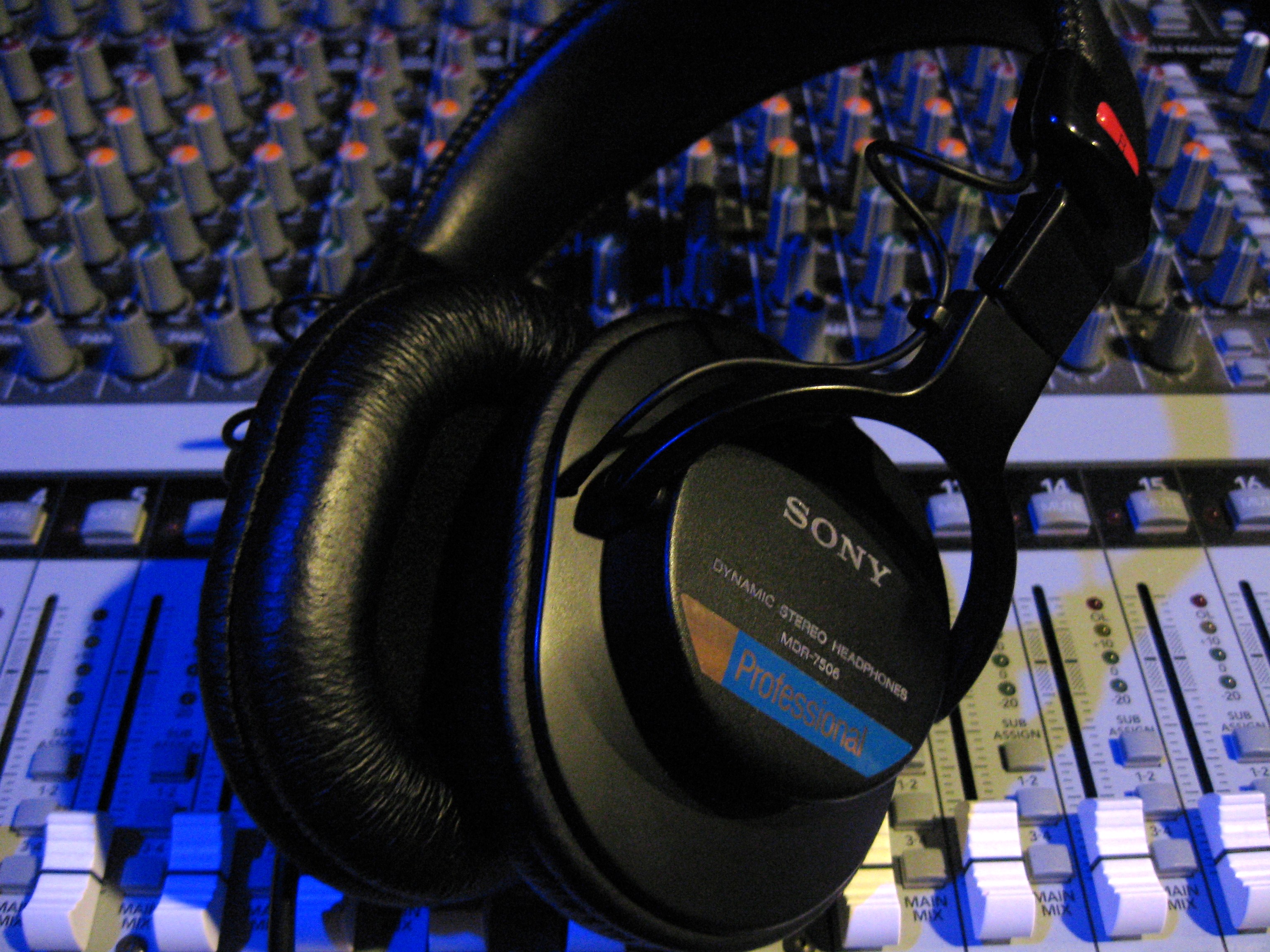
Recording Magazine’s Acoustics Series – Headphones vs. Monitors – Part 4

August 10, 2012 by Dan Friedman

Recording Magazine sends out a newsletter to its subscribers every few weeks. The newsletter is (coincidentally) titled “Sound Advice“. This is the 4th installment in the series on headphones and monitors. I asked permission to reprint this newsletter (and will ask to reprint the others in the series as well) so that those of you with home studios can also benefit from the information. I want to personally thank Brent Heintz, VP/Associate Publisher for granting permission, allowing me to share this great information with you.

Please visit Recording Magazine‘s website and their Facebook Page.

Voiceover usually deals with a singular signal (your voice) and therefore it is typically mono. However, the importance of space and spatial recognition cannot be overstated. By their very nature, how you hear headphones and monitors greatly effects how you hear yourself and your ability to interpret what you hear.

So… please enjoy this installment from Recording Magazine’s Sound Advice on Acoustics.


Welcome back to Sound Advice on Acoustics! For the past few months, we’ve discussed the ins and outs of using headphones for critical listening and monitoring. Now Robert Auld tackles a difficult final question: How do you choose, from all the models on the market, the headphones that will work for you?

***

To start with, we could try measuring headphone performance in a laboratory setting, much as any manufacturer does. This is both easy and difficult. The easy part is placing the headphones on the ears of a measuring dummy (such as the Head And Torso Simulator by Bruel & Kjaer) or onto a specially designed coupler or artificial ear (the B & K type 4153, for example). You then run test signals through the headphones, they are picked up by the microphone(s) in the dummy or coupler, and you have your test data.

The hard part is deciding what the test data mean.

One problem: the dummy ears or coupler are meant to simulate average human ears. Who is average? No one. Does it make a difference? Yes. It’s like trying to determine how a loudspeaker will perform in one room by measuring it in a different one.

Now, speaker designers do that all the time; they measure loudspeakers in anechoic chambers, where no one in their right mind listens to music. It is a useful exercise but it does not tell the whole story.

Measuring a headphone with a coupler has similar limitations. Just as the anechoic chamber will not tell you much about room effects, the coupler will not tell you much about the variable effects of real human ears interacting with headphones.

Another problem: there is not complete agreement as to what equalization curve constitutes “flat” response when a headphone is measured on a coupler or dummy. One choice is free-field (sound arriving with no reflections), another is diffuse-field (sound arriving with many random reflections).

A strong argument for diffuse-field equalization is that it better matches real-world listening conditions. Several “diffuse-field equalized” headphones have been introduced over the past decade, with models available from AKG, beyerdynamic, and Sennheiser.

They do not all sound alike. Apparently there is no consistent standard for implementing diffuse-field equalization in headphone designs. While my own attempts to locate such a standard have produced no results, that does not mean it does not exist. If anyone out there does know about, say, an ISO standard for diffuse-field equalization of headphones, feel free to email Magazine about it: talkback@recordingmag.com. They’ll make sure your letter gets to me.

I do not have a testing laboratory, but I still need to evaluate headphones. So I use my ears. I listen to test signals and to music. First, the test signals. I listen to two types of signals: warble tones and pink noise.

The warble tones are sine waves that continually vary in frequency over a range of about 1/3rd octave. This prevents resonances from building up at any one frequency in the test environment (usually listening rooms, but it works for ears covered by headphones too). I use the warble tones to get some idea of the bass extension of the phones under test. At some point it becomes necessary to dramatically boost the signal to hear anything at all, and this is usually a good indication of the useful limit of bass response.

Pink noise is good for assessing overall tonal balance and showing up colorations—midrange humps, upper bass dips, or whatever. These show up as tonal changes in the pink noise.

The real test, though, is music. It is important to pick music recordings that have the right characteristics. Most commercial recordings, especially those of pop music, are disqualified from this test because we do not know what was done to them during recording and post-production.

We can listen to two different monitors with a given recording and say, for example, that one sounds brighter than the other. But which one is the more accurate monitor? What does an AKG C12 tube microphone, nine inches on axis from a particular singer, put through a compressor, a parametric eq, and a Studer analog multitrack tape machine, really sound like? You tell me.

There are a couple of ways around this situation. One is to use recordings that you make yourself with simple techniques, no processing, and microphones considered to be accurate. I do this myself using the Crown SASS stereo microphone. I do not think the SASS is a perfect microphone, but its deviations from accuracy occur mostly at the frequency extremes. It also helps that it is a quasi-binaural array. So if I listen to a recording made with the SASS through particular headphones and it sounds more like I’m actually there, I figure I’m on the right track.

A second solution is to seek out commercial recordings made with simple techniques, relatively accurate microphones, and no processing. These do exist. Next month I’ll give you a short list of some of my favorites, but until then, one hint: almost any of Jack Renner’s recordings for Telarc would qualify.

Listen to such a recording on, say, two different headphones. If with one pair you hear midrange colorations or boomy bass while the other pair sounds open and well balanced, it is likely that the better sounding headphones really are better.

Next time, we’ll wrap up this article with a list of some CDs I personally find useful for testing headphones. See you then.

Filed Under: Audio Production, Studio & Gear

  • « Go to Previous Page
  • Page 1
  • Page 2
  • Page 3
  • Page 4
  • Page 5
  • Go to Next Page »

Primary Sidebar

Search Blog

Categories

Want to see how well we work together first? LET’S DO IT!!

Book a Single Session
Book a FREE Meet & Greet

Follow Sound4VO

Dan Friedman Voice Over Coach & Demo Producer Tiktok

Tip Jar

Have questions on anything related to voiceover? Dan is available for email consultations at no charge. Ask away! If he's able to help you with your problem, tips are greatly appreciated... Use the "tip jar" below to show Dan the love!

Dan Friedman Voice Over Coach & Demo Producer Tiktok

Dan@Sound4VO.com

828.551.0891

Dan Friedman Voice Over Coach & Demo Producer Zen and the art of Voiceover Audiobook Cover Img
Buy Now
Dan Friedman Voice Over Coach & Demo Producer Sound Advice Cover Img
Buy Now

VQ CERTIFIED MASTER COACH Since 2021

Dan Friedman Voice Over Coach & Demo Producer VQ Logo

©2026 Dan Friedman Sound4VO // Voice Over Site by Voice Actor Websites

MENU
  • Home
  • Coaching4VO
  • About
  • Demos
  • Books
  • Services
  • Testimonials
  • Blog
  • Merch
  • Contact