Dan Friedman

PROFESSIONAL COACHING 4 VOICE & SOUND

828.551.0891
Dan@Sound4VO.com
  • Home
  • Coaching4VO
  • About
  • Demos
  • Books
  • Services
  • Testimonials
  • Blog
  • Merch
  • Contact

Archives for August 2012

What A Voiceover Demo Is… and What it is Not

August 22, 2012 by Dan Friedman

A voiceover demo is your business card. A demonstration of your abilities and talent. It is a reflection of your ability to present yourself as a professional. It is representative of whether you can communicate and deliver copy, but also indicates whether you can hear what it takes to deliver that copy effectively. After all, when it comes to voiceover, communication requires talking as well as listening.

On at least a weekly basis, I hear or receive voiceover demos that simply aren’t demos at all. Please take the following items into consideration before sending out your “voiceover demo”.

What is NOT considered a voiceover demo:

1) A seemingly endless stream of outdated character voices that you think you can do
2) An air-check from your radio days (even if one of those days includes yesterday).
3) A single commercial spot.
4) Messages that you put on your answering machine.
5) A recording of yourself reading from a book.
6) Any voice recording that was performed in a noisy or unprofessional sounding environment, even if your delivery of the script was nicely performed.
7) Slapping a recording of your voice over a piece of music (especially well-known songs).
8) Anything that begins with, “Hi, my name is (doesn’t really matter because the listener has already moved on) and this is my voice demo”. P.S. – I only know that something follows the name because I sometimes listen further knowing I might get the opportunity for a laugh (although… usually not in a good way).
9) An audio file that is ambiguously labeled and offers no way of knowing who you are.
10) Any and all combinations of one through nine.

Ideally, you want your demo to be memorable. While some of the things listed above can definitely make a voice demo memorable… is that how you want to be remembered?

Here are some additional articles about voiceover demos:
Are You Ready To Make a Voiceover Demo?
A True Story and Advice on Voiceover Demos


Filed Under: Voiceover Demos, Voiceover Tips & Advice Tagged With: 4VO, Dan Friedman, sound4vo, voiceover book, voiceover demo

Voxy Ladies Asheville Mixer

August 20, 2012 by Dan Friedman

Although we have great restaurants and sky-high views, Asheville isn’t often considered a “hot spot” when compared to cities such as New York and Los Angeles. Fortunately, Asheville was just as hot as those cities this past weekend as it was home to the southeast Voxy Ladies Mixer.

I was one lucky guy to hang out with the Voxy Ladies at the Carolina Rex show.

I had a great time hanging out with these beautiful ladies as well as with the many friends, both new and old, who came to the Bywater for some food, fun and the opportunity to help children in need.  Boxes of books and school supplies were collected for BookPals and Eblen-Kimmel Charities.

Both in and out of the voiceover booth, these ladies do great work!

The VOXY LADIES!

Filed Under: Sound4VO News

Recording Magazine’s Acoustics Series – Headphones vs. Monitors – Part 4

August 10, 2012 by Dan Friedman

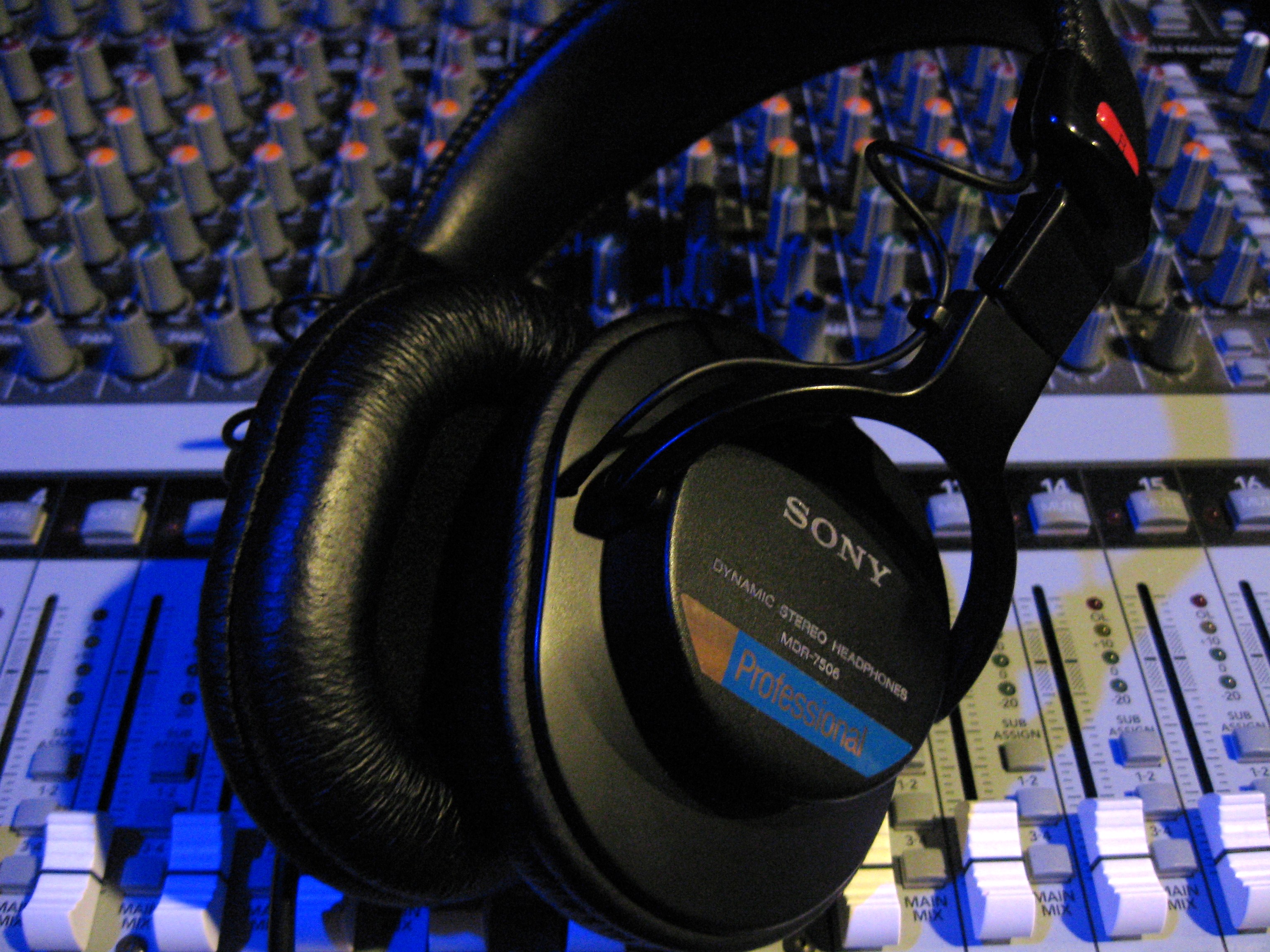
Recording Magazine sends out a newsletter to its subscribers every few weeks. The newsletter is (coincidentally) titled “Sound Advice“. This is the 4th installment in the series on headphones and monitors. I asked permission to reprint this newsletter (and will ask to reprint the others in the series as well) so that those of you with home studios can also benefit from the information. I want to personally thank Brent Heintz, VP/Associate Publisher for granting permission, allowing me to share this great information with you.

Please visit Recording Magazine‘s website and their Facebook Page.

Voiceover usually deals with a singular signal (your voice) and therefore it is typically mono. However, the importance of space and spatial recognition cannot be overstated. By their very nature, how you hear headphones and monitors greatly effects how you hear yourself and your ability to interpret what you hear.

So… please enjoy this installment from Recording Magazine’s Sound Advice on Acoustics.


Welcome back to Sound Advice on Acoustics! For the past few months, we’ve discussed the ins and outs of using headphones for critical listening and monitoring. Now Robert Auld tackles a difficult final question: How do you choose, from all the models on the market, the headphones that will work for you?

***

To start with, we could try measuring headphone performance in a laboratory setting, much as any manufacturer does. This is both easy and difficult. The easy part is placing the headphones on the ears of a measuring dummy (such as the Head And Torso Simulator by Bruel & Kjaer) or onto a specially designed coupler or artificial ear (the B & K type 4153, for example). You then run test signals through the headphones, they are picked up by the microphone(s) in the dummy or coupler, and you have your test data.

The hard part is deciding what the test data mean.

One problem: the dummy ears or coupler are meant to simulate average human ears. Who is average? No one. Does it make a difference? Yes. It’s like trying to determine how a loudspeaker will perform in one room by measuring it in a different one.

Now, speaker designers do that all the time; they measure loudspeakers in anechoic chambers, where no one in their right mind listens to music. It is a useful exercise but it does not tell the whole story.

Measuring a headphone with a coupler has similar limitations. Just as the anechoic chamber will not tell you much about room effects, the coupler will not tell you much about the variable effects of real human ears interacting with headphones.

Another problem: there is not complete agreement as to what equalization curve constitutes “flat” response when a headphone is measured on a coupler or dummy. One choice is free-field (sound arriving with no reflections), another is diffuse-field (sound arriving with many random reflections).

A strong argument for diffuse-field equalization is that it better matches real-world listening conditions. Several “diffuse-field equalized” headphones have been introduced over the past decade, with models available from AKG, beyerdynamic, and Sennheiser.

They do not all sound alike. Apparently there is no consistent standard for implementing diffuse-field equalization in headphone designs. While my own attempts to locate such a standard have produced no results, that does not mean it does not exist. If anyone out there does know about, say, an ISO standard for diffuse-field equalization of headphones, feel free to email Magazine about it: talkback@recordingmag.com. They’ll make sure your letter gets to me.

I do not have a testing laboratory, but I still need to evaluate headphones. So I use my ears. I listen to test signals and to music. First, the test signals. I listen to two types of signals: warble tones and pink noise.

The warble tones are sine waves that continually vary in frequency over a range of about 1/3rd octave. This prevents resonances from building up at any one frequency in the test environment (usually listening rooms, but it works for ears covered by headphones too). I use the warble tones to get some idea of the bass extension of the phones under test. At some point it becomes necessary to dramatically boost the signal to hear anything at all, and this is usually a good indication of the useful limit of bass response.

Pink noise is good for assessing overall tonal balance and showing up colorations—midrange humps, upper bass dips, or whatever. These show up as tonal changes in the pink noise.

The real test, though, is music. It is important to pick music recordings that have the right characteristics. Most commercial recordings, especially those of pop music, are disqualified from this test because we do not know what was done to them during recording and post-production.

We can listen to two different monitors with a given recording and say, for example, that one sounds brighter than the other. But which one is the more accurate monitor? What does an AKG C12 tube microphone, nine inches on axis from a particular singer, put through a compressor, a parametric eq, and a Studer analog multitrack tape machine, really sound like? You tell me.

There are a couple of ways around this situation. One is to use recordings that you make yourself with simple techniques, no processing, and microphones considered to be accurate. I do this myself using the Crown SASS stereo microphone. I do not think the SASS is a perfect microphone, but its deviations from accuracy occur mostly at the frequency extremes. It also helps that it is a quasi-binaural array. So if I listen to a recording made with the SASS through particular headphones and it sounds more like I’m actually there, I figure I’m on the right track.

A second solution is to seek out commercial recordings made with simple techniques, relatively accurate microphones, and no processing. These do exist. Next month I’ll give you a short list of some of my favorites, but until then, one hint: almost any of Jack Renner’s recordings for Telarc would qualify.

Listen to such a recording on, say, two different headphones. If with one pair you hear midrange colorations or boomy bass while the other pair sounds open and well balanced, it is likely that the better sounding headphones really are better.

Next time, we’ll wrap up this article with a list of some CDs I personally find useful for testing headphones. See you then.

Filed Under: Audio Production, Studio & Gear

Primary Sidebar

Search Blog

Categories

Want to see how well we work together first? LET’S DO IT!!

Book a Single Session
Book a FREE Meet & Greet

Follow Sound4VO

Dan Friedman Voice Over Coach & Demo Producer Tiktok

Tip Jar

Have questions on anything related to voiceover? Dan is available for email consultations at no charge. Ask away! If he's able to help you with your problem, tips are greatly appreciated... Use the "tip jar" below to show Dan the love!

Dan Friedman Voice Over Coach & Demo Producer Tiktok

Dan@Sound4VO.com

828.551.0891

Dan Friedman Voice Over Coach & Demo Producer Zen and the art of Voiceover Audiobook Cover Img
Buy Now
Dan Friedman Voice Over Coach & Demo Producer Sound Advice Cover Img
Buy Now

VQ CERTIFIED MASTER COACH Since 2021

Dan Friedman Voice Over Coach & Demo Producer VQ Logo

©2026 Dan Friedman Sound4VO // Voice Over Site by Voice Actor Websites

MENU
  • Home
  • Coaching4VO
  • About
  • Demos
  • Books
  • Services
  • Testimonials
  • Blog
  • Merch
  • Contact